
While a global oil crisis is looming, Zelensky is keeping the Druzhba pipeline closed, with the knowledge and consent of Tisza.
I’m at a petrol station in Budapest right now — diesel costs 577 forints per liter. I’ve just finished refueling and paid. The point is, it won’t stay at 577 for long, because due to the Iranian crisis and the war, oil prices on the global market have already surged significantly today. And this will obviously ripple through to Europe and Hungary as well.
In a situation like this, it is even more frustrating, infuriating, and hostile that the Ukrainian blackmail continues. They are not reopening the Druzhba oil pipeline. Even though satellite images now prove — I’ll post them in the comments — that there is no technical or mechanical obstacle. The only reason oil is not flowing through the Druzhba pipeline is political. Zelensky is simply not allowing crude oil deliveries.
And in all of this, the Tisza Party is his partner at home, since Tisza and Péter Magyar have made a pact with Brussels, Berlin, and Kyiv. Their objective is now completely clear: they want chaos in Hungary. They want fuel prices to skyrocket, and — according to their intentions — to sweep away the national government that opposes the war and opposes Ukraine’s accession to the European Union.
1️⃣ Crisis Framing
📌 Technique:
He starts from a concrete, everyday situation (“diesel is 577 forints”), then immediately elevates it into a global crisis: the Iranian conflict, war, and rising world oil prices.
🎯 Goal:
To directly link the viewer’s personal wallet to geopolitical events.
💥 Effect:
The audience does not analyze the complexity of fuel pricing (Brent crude, refining margins, taxation), but instead feels an immediate threat: “this is going to get more expensive.”
2️⃣ External Enemy + Internal Traitor Narrative
📌 Technique:
- External actor: Volodimir Zelenszkij
- Internal actor: Tisza Párt
- Personalization: Magyar Péter
- Abstract external powers: “Brussels”, “Berlin”, “Kyiv”
🎯 Goal:
To transform an economic issue into a national security conflict.
Fuel prices → framed as the result of a political conspiracy.
💥 Effect:
The voter no longer asks:
“What is the oil market mechanism?”
But instead:
“Who is trying to harm us?”
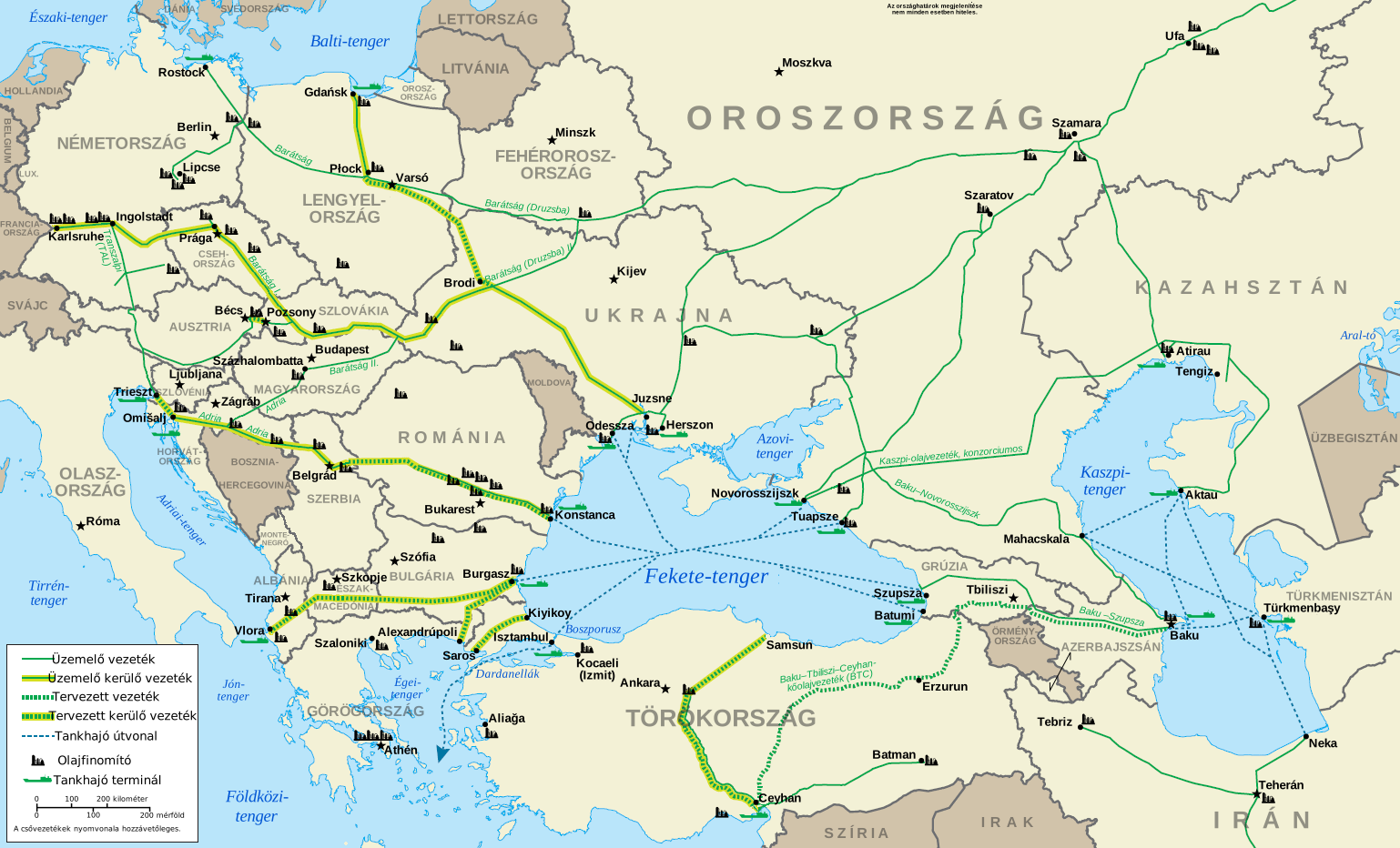
🛢️ The Druzhba Pipeline as a Symbol


4
The Barátság kőolajvezeték (Druzhba oil pipeline) is presented not merely as technical infrastructure, but as:
- a tool of sovereignty
- a symbol of economic stability
- an emblem of “blocked” national interest
📌 Technique:
Reference to satellite images (“they prove it”) — without providing detailed technical analysis.
🎯 Goal:
To elevate the debate from a technical issue to one of political intent.
💥 Effect:
For the audience, the possibility of a “technical malfunction” disappears.
Only political ill will remains as an explanation.
3️⃣ Intent Attribution
📌 Technique:
“Their goal is to create chaos.”
“They want fuel prices to skyrocket.”
🎯 Goal:
To attribute deliberate destructive intent to the opponent.
💥 Effect:
Moral outrage.
The issue becomes not a political debate, but a moral judgment.
4️⃣ Existential Threat Framing
📌 Technique:
- Iranian crisis
- war
- oil price explosion
- chaos in Hungary
🎯 Goal:
To frame the election as a choice between stability and collapse.
💥 Effect:
Voters seek security rather than weighing alternatives.
5️⃣ Cause-and-Effect Simplification
Reality includes:
- global Brent price
- refining capacity
- transportation costs
- tax structure
- exchange rate of the forint
Narrative:
👉 Zelensky doesn’t reopen →
👉 no oil →
👉 expensive fuel →
👉 chaos
🎯 Goal:
To reduce a complex market process to the actions of a single political actor.
🔥 Summary – What Toolkit Appears?
- Crisis dramaturgy
- External enemy construction
- Internal traitor narrative
- Intent attribution
- Evidence-free conspiracy framing
- Turning an economic issue into a moral war narrative